

- 1There is no dry month at Milford Sound: NIWA's 1991 to 2020 averages give 440 mm of rain in June, the lowest month, and 667 mm in January, the highest.
- 2For the warmest days, go from December to February: NIWA's average highs are 18.5°C to 20.0°C, and Visit Fiordland gives daylight from about 5.30 am to 9.30 pm, but DOC says the Milford Journey is busiest from October to April.
- 3For the most settled weather, go from June to August: Visit Fiordland calls winter the most settled time of year, but daylight runs only from about 8.30 am to 4.30 pm and DOC says winter conditions can be extremely challenging.
- 4Rain is part of the visit: Visit Fiordland says the waterfalls are at their most spectacular on rainy days, and RealNZ says its cruise is likely to go ahead in most weather apart from a road closure due to snow, and that very strong wind is usually the only weather that cancels it.
Tours that fit this guide
- 12 hours.
- 4 hours 30 minutes.
- 2 hours.
Check dates, pickup and inclusions on the booking page. We may earn a commission if you book.
01 / Short answer
rain is part of Milford Sound in every month, so choose the season by what you want
There is no dry month at Milford Sound, so the best time to visit depends on what you want from the day. For warmth and the longest daylight, go from December to February. For what Visit Fiordland calls the most settled weather, go from June to August, with short days and a harder road. For the waterfalls, go on a rainy day in any month. Earth Sciences New Zealand (NIWA) 1991 to 2020 averages put Milford Sound's rainfall at 440 mm in June, its lowest month, and 667 mm in January, its highest, so even the driest month is wet. The Department of Conservation (DOC) says the Milford Journey is busiest in summer between October and April. The booking guide covers how early to reserve.
02 / The numbers
Milford Sound by month, NIWA averages for 1991 to 2020
| Month | Rain, and days with 1 mm or more | Average high / low (°C) |
|---|---|---|
| January | 667 mm, 16 days | 19.5 / 10.7 |
| February | 467 mm, 13 days | 20.0 / 10.7 |
| March | 571 mm, 14 days | 18.5 / 9.2 |
| April | 528 mm, 13 days | 15.9 / 7.0 |
| May | 645 mm, 16 days | 12.5 / 4.9 |
| June | 440 mm, 15 days | 9.3 / 2.3 |
| July | 468 mm, 14 days | 9.2 / 1.6 |
| August | 457 mm, 16 days | 11.2 / 2.7 |
| September | 541 mm, 18 days | 13.2 / 4.1 |
| October | 617 mm, 18 days | 15.0 / 5.8 |
| November | 558 mm, 15 days | 16.4 / 7.6 |
| December | 585 mm, 17 days | 18.5 / 9.7 |
03 / The rain
among the wettest places in the country, and the reason the waterfalls run
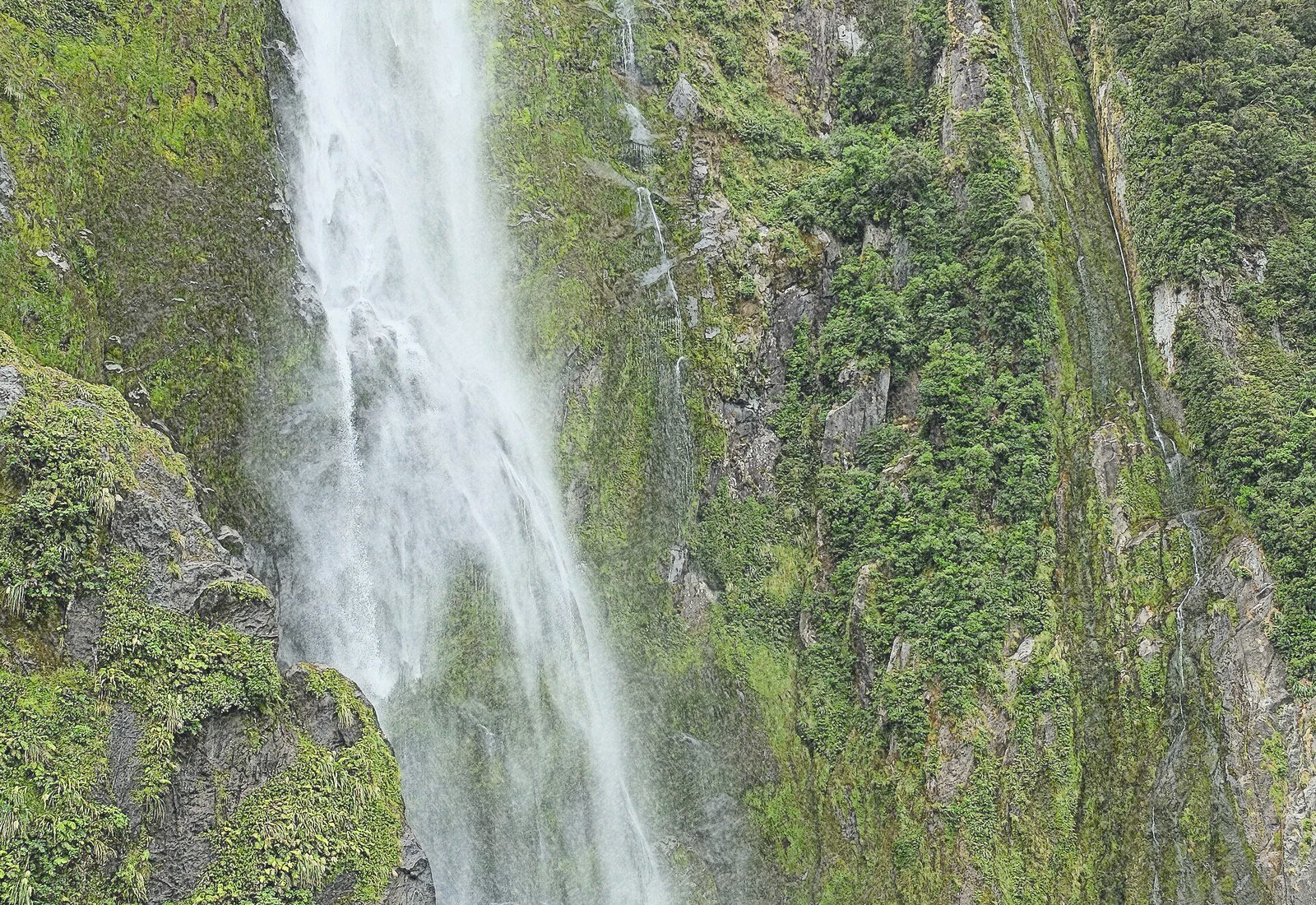
DOC says Milford Sound is one of the wettest places in Aotearoa New Zealand, with up to 7 metres of rain each year. NIWA's 1991 to 2020 average for the Milford Sound station is 6,545 mm a year. Visit Fiordland says Milford Sound can see above-average rainfall while Te Anau is below average, so check the forecast for Milford Sound itself. The upside is the water. Visit Fiordland says the waterfalls are at their most spectacular on rainy days, and RealNZ says it welcomes heavy rain because it brings out the hundreds of waterfalls. DOC advises carrying waterproof clothing, because weather can change quickly.
04 / The four seasons
What each season is like in Fiordland and at the fiord
Temperatures and rain are NIWA averages for 1991 to 2020. Descriptions are from Visit Fiordland unless another publisher is named.
Summer
December to February: warmest, longest days, inside DOC's busy period
Autumn
March to May: cooling, misty and evergreen
Winter
June to August: settled, cold and short days
Spring
September to November: unsettled, with the most wet days
05 / Daylight, crowds, flights
The practical limits that change with the season
These are the facts that most change a day at Milford Sound from one season to the next.
- Daylight
For Fiordland as a whole, Visit Fiordland gives dawn at about 5.30 am and dusk at about 9.30 pm in summer, and sunrise at about 8.30 am and sunset at about 4.30 pm in winter. Check sunset against your return plan if you travel in winter.
- Crowds
DOC says traffic and parking are often busiest between 9.30 am and 1.30 pm, and that arriving in Milford Sound after 1.30 pm avoids the crowds. It also says traffic volumes are lower in winter. In winter a 1.30 pm arrival leaves about 3 hours before Visit Fiordland's sunset of about 4.30 pm, so do not use it for a same day return drive from Queenstown.
- Flights
Air Milford says flights to Milford Sound operate approximately 250 days per year due to the weather, and Glenorchy Air says its flight crosses the Southern Alps so conditions are always weather-dependent.
06 / Winter and the road
road is the part of the season that can change your plan
DOC defines winter on the Milford Road as May to September and says conditions can be extremely challenging, with snow, ice and freezing temperatures making driving hazardous. It says to expect closures and delays in winter due to weather, rock falls and snow or avalanche, and that if you are not confident driving in winter conditions you should take a coach. Visit Fiordland says you must check the Milford Road status on the NZTA website before driving to Milford Sound.
07 / Choosing your month
Decide in this order
- 01Pick your priority
Warmth and long days point to December to February. Visit Fiordland's most settled season and DOC's lower winter traffic point to June to August. The lowest counts of wet days in NIWA's averages, about 13 a month, are February and April.
- 02Pack for rain
NIWA's lowest monthly total is 440 mm, so carry waterproofs in every season.
- 03Keep a spare day
Air Milford says a flight can be moved to the next probable departure time or the next fine weather day.
- 04Check before you leave
Look at the NZTA road status and the forecast for your date, and call a flight operator for its weather check on the day.