- 1Bungy and bungee are the same activity with two spellings. AJ Hackett says bungee is the more common spelling worldwide and bungy is the New Zealand spelling its company has used since the first commercial jump in 1988, and Cambridge Dictionary lists both.
- 2The Vanuatu Tourism Office says land diving on Pentecost Island in Vanuatu is believed to be the precursor. Guinness World Records lists the first recorded bungee jumps as 1 April 1979 from the Clifton Suspension Bridge in Bristol.
- 3AJ Hackett's own timeline has Chris Sigglekow making a test jump at Pelorus Bridge in January 1980, AJ Hackett jumping from the Eiffel Tower on 26 June 1987, and the Kawarau Bridge site near Queenstown opening on 12 November 1988.
- 4We found no official rule behind the spelling. AJ Hackett says bungy took hold in New Zealand as the sport was commercialised here, so in our view it is custom, and Cambridge Dictionary lists both spellings.
01 / Short answer
Same jump, two spellings: bungy and bungee
Bungy and bungee are two spellings of the same word. Cambridge Dictionary defines bungee as a long, strong cord that stretches, used in the activity of bungee jumping, and lists bungy as an alternative spelling. AJ Hackett's article on the spelling says bungee is the more common spelling worldwide and bungy is the New Zealand spelling, used by its company and other New Zealand operators since the sport was commercialised in 1988. We found no official rule on which to use. In our view, write bungy when you mean a jump in New Zealand. Most of the New Zealand dates in this guide come from AJ Hackett's own timeline and blog, which are the operator's account. This guide covers the history and the spelling. For prices and choosing between jumps, read our Queenstown bungy guide.
02 / Timeline
Bungy jumping, from vines to Kawarau
| When | What happened | Where the record comes from |
|---|---|---|
| A centuries-old ritual | Men on Pentecost Island, Vanuatu, leap from a wooden tower of logs and vines, using vines instead of ropes. The Vanuatu Tourism Office says the ritual is believed to be the precursor to modern bungee jumping. | Vanuatu Tourism Office |
| 1 April 1979 | David Kirke, then Simon Keeling, Alan Weston and Tim Hunt of Oxford University's Dangerous Sports Club jump from the Clifton Suspension Bridge in Bristol, some 76 m above the River Avon. | Guinness World Records |
| January 1980 | Chris Sigglekow, who had heard about the Bristol stunt, makes a test jump from the Pelorus Bridge in New Zealand and goes into the water feet first before the cord takes his weight. | AJ Hackett International timeline |
| November 1986 | AJ Hackett's timeline records his first jump at the Greenhithe Bridge in Auckland, a 19 m drop over the Waitemata Harbour. An AJ Hackett blog names the Upper Harbour Bridge instead. | AJ Hackett timeline and blog |
| 26 June 1987 | AJ Hackett jumps from the Eiffel Tower in Paris, without permission according to AJ Hackett's own blog. | AJ Hackett timeline and blog |
| 1988 | AJ Hackett's timeline lists the Ohakune site as the world's first commercial bungy site. On 12 November the Kawarau Bridge site near Queenstown opens as the world's first year-round commercial public site. Its blogs call Kawarau the first. | AJ Hackett timeline and blogs |
| 1989 | A first draft of a bungy code of practice is presented. According to AJ Hackett's timeline, it became AS/NZS 5848, the standard bungy is regulated by in New Zealand. | AJ Hackett International timeline |
03 / Where it began
Before the bridges, there were vines: land diving on Pentecost Island
The Vanuatu Tourism Office describes Naghol, or land diving, as a centuries-old tradition on Pentecost Island. Men leap from a wooden tower of logs and vines that can reach 30 metres, using vines instead of ropes. The office says the dive is performed to ensure a good yam harvest and honour ancestral traditions, that only men take part, and that the jump is a rite of passage in some communities. It also says the ritual is believed to be the precursor to modern bungee jumping, and AJ Hackett's article says the sport borrows its idea from Naghol. The office's 2026 listing ran every Saturday from 4 April to 27 June at Ratap, Pentecost. In our view, treat it as a living ceremony rather than an early version of an activity, and check the Vanuatu Tourism Office's events listing for the next season before you plan to watch.
04 / The first recorded jump
A top hat and a bridge in Bristol, 1 April 1979
Guinness World Records lists the first recorded bungee jumps as taking place from the Clifton Suspension Bridge in Bristol, some 76 m above the River Avon, on 1 April 1979. David Kirke jumped first, tied to an elasticated rope, followed by Simon Keeling, Alan Weston and Tim Hunt. All four belonged to Oxford University's Dangerous Sports Club. Kirke wore top hat, tails and a mask and held a bottle of champagne, and in 2019 he said the rope had not been tested first. The four were arrested and fined, then released on condition they never repeated the stunt. The club went on to jump in the United States, including from the Golden Gate Bridge in San Francisco, and by the early 1980s were also jumping from hot-air balloons and mobile cranes.
05 / New Zealand
How New Zealand turned a stunt into an industry
- 01A test jump at Pelorus Bridge, January 1980
AJ Hackett's timeline says Chris Sigglekow had heard about the Bristol stunt and jumped from the Pelorus Bridge with a borrowed parachute harness and a cord cut to a random length. He went into the water feet first before the cord took his weight.
- 02A first jump in Auckland, November 1986
AJ Hackett's timeline records his first jump at the Greenhithe Bridge, a 19 m drop over Auckland's Waitemata Harbour. A blog on the same company's site names Auckland's Upper Harbour Bridge, so the bridge itself is unsettled in its own account.
- 03The Eiffel Tower, 26 June 1987
The timeline has AJ Hackett introducing the world to bungy jumping with a jump from the Eiffel Tower. His blog says he had no permission or audience.
- 04Ohakune and Kawarau, 1988
AJ Hackett and Henry van Asch pioneered commercial bungy jumping, according to AJ Hackett's blog. The company's own pages differ on the first site: its timeline lists Ohakune as the first commercial site and Kawarau Bridge, opened on 12 November, as the first year-round commercial public site, while its blogs call Kawarau the first.
- 05Rules for a new industry, 1989
A first draft of a bungy code of practice was presented. According to AJ Hackett's timeline, it became AS/NZS 5848, the standard by which bungy is regulated in New Zealand.
- 06One million clients, July 1999
AJ Hackett's timeline says the AJ Hackett Bungy company celebrated its millionth bungy jump client in July 1999.
06 / The spelling
Why bungy and not bungee in New Zealand
No source we read documents a single reason. AJ Hackett says bungy is the spelling that took hold in New Zealand as the sport was commercialised here, and the one its brand has used since 1988. It says that is not a typo or a rebrand for the sake of it. The word itself is a puzzle: Dictionary.com marks the origin of bungee as uncertain, and AJ Hackett's article says the Oxford English Dictionary lists it as unknown and that by the 1930s bungee was British slang for a rubber cord or elastic strap used on gliders and luggage. Cambridge Dictionary lists bungee with bungy as an alternative. In our view, bungy is New Zealand custom and brand habit rather than a rule, which is why both are correct.
07 / Try it
From the history to a jump near Queenstown
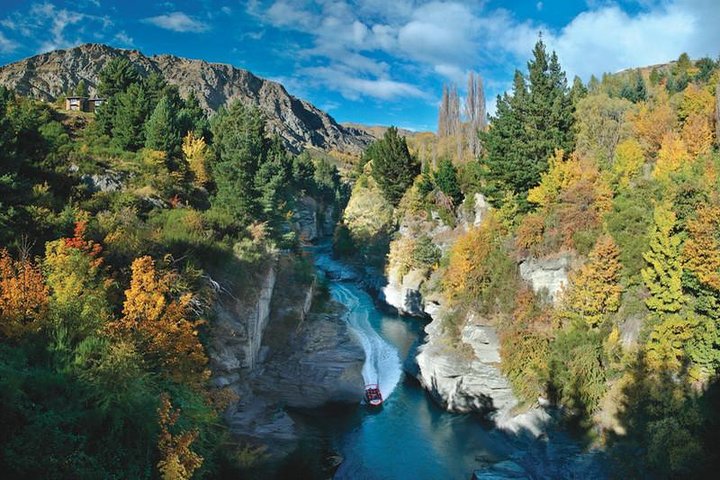
This guide does not compare prices or choose between jumps. Our Queenstown bungy guide does that, and our Kawarau Bridge page covers the bridge itself. The tour card on this page is the Shotover Canyon Swing, which our bungy guide describes, from the operator's own website, as a canyon swing rather than a bungy. If the history makes you want to see where the Queenstown story began, start with the Kawarau Bridge page.